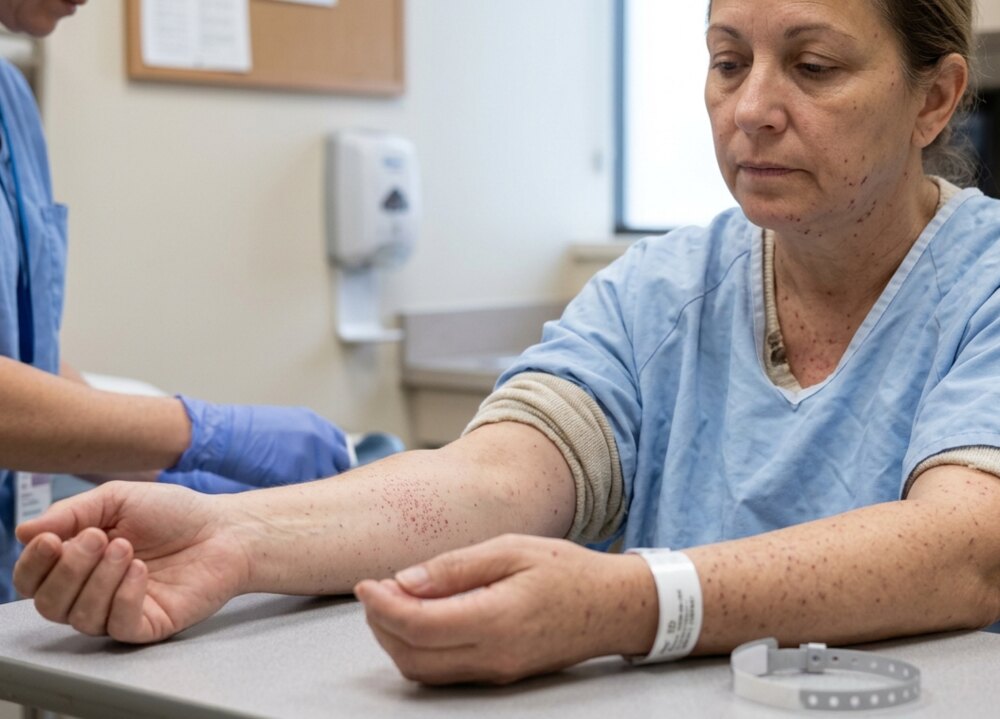
Bed sores, also known as pressure ulcers, are injuries to the skin and underlying tissue that occur due to prolonged pressure. They often appear over bony areas, such as the heels, hips, and tailbone. Early care, hygiene, and repositioning prevent sores and reduce serious complications.
What Are the Symptoms?
Bed sores can appear as:
- Changes in skin color or texture
- Swelling or puffiness
- Pus-like or fluid drainage
- Skin that feels warmer or cooler than the surrounding areas
- Tender or painful spots
Bed sores are staged by severity, from mild skin redness to deep tissue injuries affecting muscles and bones.
What Are Common Sites of Pressure Ulcers?
Bed sores often develop over bony areas where pressure is highest.
For wheelchair users
- Tailbone or buttocks
- Shoulder blades and spine
- Back of arms and legs that rest against the chair
For bedridden individuals
- Back or sides of the head
- Shoulder blades
- Hips, lower back, or tailbone
- Heels, ankles, and skin behind the knees
Why Do Bed Sores Form?
Bed sores develop when prolonged pressure reduces blood flow to the skin. Other contributing factors include:
- When the skin rubs against clothing or bedding, especially if it is moist.
- When the skin moves in one direction, the tissue underneath moves the opposite way.
- Limited mobility makes the skin more vulnerable, particularly over bony areas with little muscle or fat.
Who Is at Risk of Bed Sores?
- Immobile individuals who cannot change positions easily
- People with incontinence, exposing skin to urine or stool
- Those with nerve damage or reduced sensation
- People with poor nutrition or hydration
- Patients with medical conditions affecting blood flow, like diabetes or vascular disease
- Older adults, particularly those above 70
What Are the Possible Complications?
Cellulitis: Skin infection causing warmth, swelling, and redness
Bone and joint infections: Can damage joints (septic arthritis) or bones (osteomyelitis)
Cancer: Chronic non-healing sores may develop into Marjolin ulcers
Sepsis: Rare but life-threatening systemic infection
When Should You See a Doctor?
- If the sores do not improve within 24–48 hours
- If fever, foul-smelling drainage, warmth, or swelling occurs
- Early medical care helps prevent serious complications.
How Are Bed Sores Diagnosed?
- Doctors examine the skin and assign a stage to the sore
- Blood tests may check overall health
- Doctors may ask about onset, severity, previous sores, care routines, medical history, and diet
What Are Treatment Options?
Treatment focuses on reducing pressure, caring for wounds, controlling pain, preventing infection, and supporting healing. Methods include:
- Repositioning and pressure reduction
- Cleaning, dressing, and debridement of damaged tissue
- NSAIDs or topical pain relievers
- Adequate protein, vitamins, and minerals to support healing
- Large or non-healing sores may require flap surgery using skin, muscle, or tissue to cover wounds and cushion bones
How Can You Take Care at Home?
- Change positions frequently
- Keep skin clean and dry
- Use barrier creams for protection
- Inspect skin daily for early warning signs
- Maintain proper hydration and nutrition
How Can Bed Sores Be Prevented?
- Shift positions regularly, at least every 2 hours
- Use supportive mattresses and cushions
- Keep the head of the bed below 30 degrees to prevent shear
- Eat a balanced diet and stay hydrated
- Quit smoking, manage stress, and exercise daily
How To manage the Pain?
- Over-the-counter pain relief like NSAIDs
- Topical pain creams during wound care
- Proper positioning to reduce pressure-related pain
- Nutrition and Hydration
- Adequate protein, vitamins, and minerals are essential
- Hydration helps skin stay healthy
Frequently Asked Questions (FAQs)
Q1. Can bed sores heal on their own?
Mild sores can heal with care and repositioning. Severe sores may require medical treatment or surgery.
Q2. How quickly can bed sores develop?
They can appear within hours or days if pressure is prolonged and mobility is limited.
Q3. Are bed sores always painful?
They can be, but nerve damage may reduce sensation in some patients.
Q4. Can nutrition affect healing?
Yes, proper hydration, protein, vitamins, and minerals support repair and recovery.
Important Note: This information is for awareness purposes only. Please consult a healthcare professional for medical advice, diagnosis, or treatment.