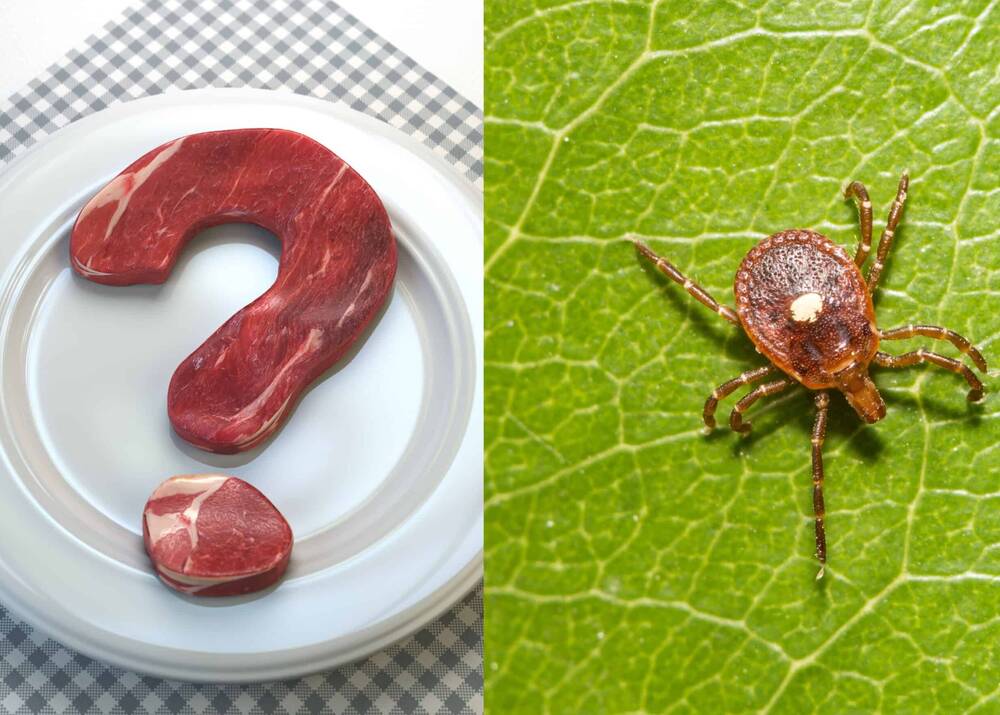
Alpha-gal syndrome is a rare but serious food allergy. It makes the body react to red meat and other products from mammals. The condition usually begins after a tick bite carries a sugar molecule called alpha-gal into the bloodstream. What sets this allergy apart is timing. Symptoms often appear hours after eating, not right away. Because of this delay, many cases remain undiagnosed for years.
What are the symptoms?
- Alpha-gal allergy reactions usually appear much later than other food allergies
- Allergies to foods like peanuts or shellfish often start within minutes
- In alpha-gal syndrome, symptoms typically begin three to six hours after eating
Foods that can trigger this delayed reaction include:
- Red meat such as beef, and lamb
- Organ meats
- Products made from mammals, including gelatin and some dairy items
Common symptoms may include:
- Skin problems such as hives, itching, or rough, irritated patches
- Swelling of the lips, face, tongue, throat, or other body parts
- Breathing difficulties, including wheezing or shortness of breath
- Digestive issues like stomach pain, nausea, vomiting, or diarrhea
In severe cases, a dangerous reaction called anaphylaxis
Why does this disease occur?
- The condition usually begins after a tick bite, most commonly from the Lone Star tick
- The tick transfers the alpha-gal molecule into the human body
- The immune system mistakenly treats this substance as dangerous and produces antibodies.
- Later, when the person eats red meat, these antibodies set off an allergic reaction.
Who is at risk of this disease?
- People who live in or travel to regions where ticks are widespread
- Hikers, campers, farmers, and others who spend a lot of time outdoors
- Individuals who have a history of multiple tick bites
- Residents of certain parts of the United States, Europe, Australia, and Asia
What are the possible complications?
- Severe allergic reactions that can become life-threatening
- Swelling that may block the airways
- A sudden drop in blood pressure
- Fainting or collapse
- Without fast treatment, these reactions can be deadly
When should you see a doctor?
- If allergy symptoms appear hours after eating meat
- If you have repeated reactions with no clear cause
- If you develop breathing problems, dizziness, or throat swelling
- If you have a history of tick bites and strange food reactions
How is this disease diagnosed?
- Doctors begin by reviewing your symptoms and medical history
- A blood test checks for alpha-gal antibodies and confirms the diagnosis
- In some cases, skin allergy tests may also be used
What are the treatment options?
- There is no permanent cure at present
- The main step is strict avoidance of red meat and mammal products
- Many patients are advised to carry an epinephrine auto-injector
- Serious reactions require immediate emergency care
How can you take care of yourself at home?
- Read ingredient labels carefully before eating packaged foods
- Avoid beef, pork, lamb, gelatin, and similar products
- Tell restaurant staff about your allergy before ordering
- Keep your emergency medicine with you at all times
- Take strong measures to avoid tick bites
How can this disease be prevented?
- Stay away from areas where ticks are common when possible
- Wear long sleeves, long pants, and closed shoes outdoors
- Use insect repellents that protect against ticks
- Check your body and clothes after outdoor activities
- Remove any tick quickly and safely using tweezers
Can this allergy go away over time?
- In certain cases, alpha-gal allergy can lessen over time
- Symptoms may become milder or disappear completely after one to two years
- Avoiding additional tick bites is key to this improvement
Frequently Asked Questions (FAQs)
Q1: Is alpha-gal syndrome a lifelong condition?
For some people it improves over time, especially if they are not bitten by ticks again.
Q2: Can people with this condition eat chicken or fish?
Yes. Poultry and seafood do not contain alpha-gal and are usually safe.
Important Note: This information is for awareness purposes only. Please consult a healthcare professional for medical advice, diagnosis, or treatment.