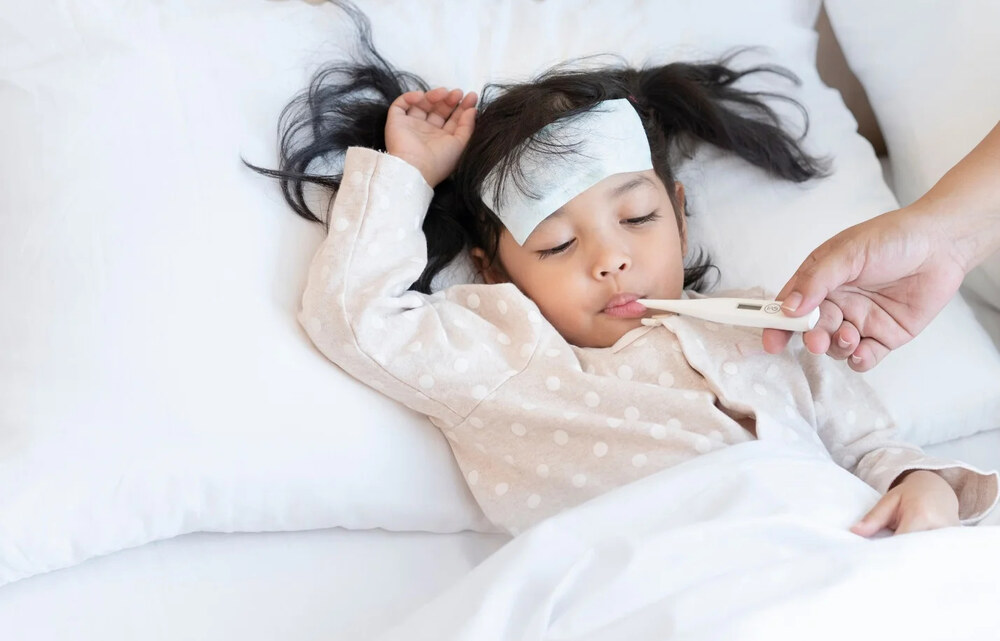
A febrile seizure is a fever-triggered convulsion that occurs in young children. It usually develops during infections that raise body temperature. These episodes can look alarming and distressing for parents. However, most febrile seizures are short, harmless, and not linked to serious brain disorders.
What are the symptoms?
A child may suddenly lose consciousness and begin shaking. Sometimes, the body becomes stiff, or only one part jerks. Key symptoms include:
- Fever above 100.4°F (38°C)
- Loss of consciousness
- Jerking movements of arms and legs
- Simple febrile seizures last up to 15 minutes and occur once in 24 hours
- Complex febrile seizures last longer, may repeat, or affect one side of the body
- These seizures often appear within 24 hours of fever onset
Why does this disease occur?
- A rapid rise in body temperature is the main trigger. Even a mild fever can cause a seizure
- Most cases are linked to viral infections
- Common causes include influenza and roseola
- In some children, fever after vaccination may also trigger a seizure
- The seizure is caused by fever, not the vaccine itself
Who is at risk of this disease?
- Children aged 6 months to 5 years are more likely to suffer
- The highest risk is between 12 and 18 months
Risk increases if:
- There is a family history of febrile seizures
- The child has a genetic tendency
What are the possible complications?
- Most febrile seizures do not cause lasting damage
- They do not affect brain function, learning, or intelligence
- They are not a sign of epilepsy
- The main concern is recurrence
- The risk is higher in younger children and those with a family history
- It also increases if the first seizure occurs with a mild fever
When should you see a doctor?
- Consult a doctor after the first febrile seizure
- Immediate medical help is needed if the seizure lasts more than five minutes
Seek urgent care if the child has:
- Vomiting
- Stiff neck
- Breathing difficulty
- Extreme drowsiness
How is this disease diagnosed?
- Doctors assess the child’s medical and developmental history
- They focus on identifying the cause of the fever
- Simple febrile seizures usually need no tests if vaccinations are complete
- If required, tests may include blood, urine, or spinal fluid analysis
- Complex cases may require further evaluation
- EEG may be used to assess brain activity
- MRI may be advised to examine the brain structure in specific situations
What are the treatment options?
Most febrile seizures stop on their own within a few minutes. During a seizure:
- Place the child on their side on a safe surface
- Note the seizure duration
- Remove nearby hard or sharp objects
- Loosen tight clothing
- Avoid restraining the child or placing anything in the mouth
- Doctors may give medication if the seizure is prolonged
- Hospital observation may be needed in selected cases
How can you take care of yourself at home?
- Stay calm and ensure the child’s safety during the episode
- Closely monitor the child until full recovery
- Comfort the child after the seizure ends.
- Use fever-reducing medicines to improve comfort
- These medicines do not prevent seizures
Frequently Asked Questions (FAQs)
Q1. Are febrile seizures dangerous?
Most febrile seizures are harmless and do not cause long-term health problems.
Q2. Can febrile seizures happen again?
Yes, some children may experience recurrent episodes, especially at a younger age.
Important Note: This information is for awareness purposes only.
Please consult a healthcare professional for medical advice, diagnosis, or treatment.