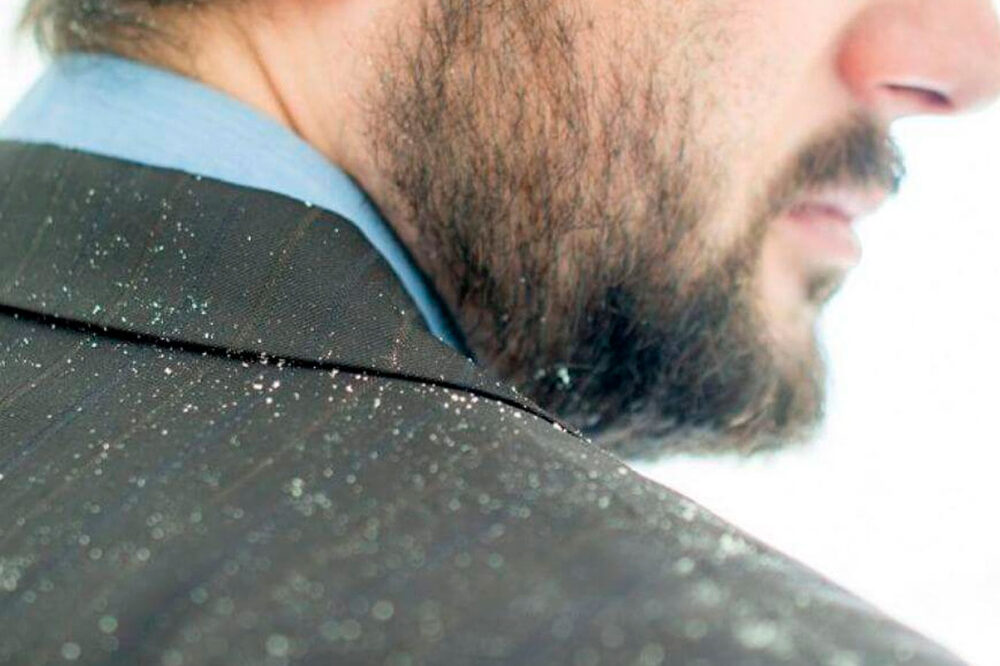
Dandruff is a common scalp condition characterized by small flakes of dry skin that fall from the scalp. It is not contagious or harmful, but it can be uncomfortable and embarrassing. Proper care and treatment usually help control the symptoms, allowing most people to manage the condition effectively.
What are the symptoms?
- Dandruff appears as visible white or yellow flakes on the scalp and hair. Flakes may also fall onto eyebrows or shoulders
- It often causes itching and mild irritation. The scalp may feel dry in some cases
- In infants, dandruff may present as thick, scaly, or crusted patches on the scalp. This is known as cradle cap
- Stress or cold, dry weather can worsen the symptoms
Why does this disease occur?
- Dandruff can develop due to several causes
- Oily or irritated scalp skin is a common trigger. Dry skin can also produce small white flakes
- A fungus called Malassezia naturally lives on most adult scalps. It feeds on oils and may accelerate flaking
- Some hair care products may irritate the scalp, a reaction called contact dermatitis
- Other skin conditions, such as psoriasis and eczema, can also lead to dandruff
Who is at risk of this disease?
- Almost anyone can develop dandruff, but some factors increase the risk
- It often starts in young adulthood and may continue through middle age. Older adults can also be affected
- Dandruff is more common in males than in females
- Certain health conditions, including Parkinson’s disease, HIV, or a weakened immune system, can make dandruff more likely
What are the possible complications?
- Dandruff rarely causes serious health issues
- Persistent itching can irritate the scalp. Excessive scratching may lead to redness, discomfort, or minor infections
When should you see a doctor?
- Most cases of dandruff do not require medical attention
- See a healthcare professional if regular dandruff shampoos do not improve the condition
How is this disease diagnosed?
- A doctor or dermatologist examines the scalp for flakes, redness, and irritation to confirm dandruff
What are the treatment options?
- Mild dandruff often improves with regular, gentle hair washing
- If ordinary shampoo does not work, medicated anti-dandruff shampoos are recommended
- These shampoos help reduce flaking, control oil, and soothe scalp irritation
- While there is no permanent cure, proper treatment helps manage symptoms effectively
How can you take care of yourself at home?
- Wash hair regularly to remove excess oil and dead skin
- Use mild hair care products to avoid irritation
- Managing stress and maintaining a healthy scalp routine can help reduce flare-ups
How can this disease be prevented?
- Complete prevention is not always possible
- Regular hair washing and scalp hygiene reduce flakes
- Avoid hair products that irritate the scalp
- Maintaining a balanced diet and controlling stress may also help prevent outbreaks
Frequently Asked Questions (FAQs)
Q1. Is dandruff contagious?
No. Dandruff cannot spread from one person to another.
Q2. Can dandruff be cured permanently?
No permanent cure exists. However, treatment can control symptoms and reduce flare-ups.
Important Note: This information is for awareness purposes only. Please consult a healthcare professional for medical advice, diagnosis, or treatment.

Tags: dandruff