Bedbugs are tiny, reddish-brown, blood-sucking insects that hide in beds, furniture, and clothing. They bite humans at night, causing itching, redness, and allergic reactions. While they do not spread disease, infestations can cause discomfort, stress, and skin complications if not managed promptly and effectively.
What are the Symptoms of a bedbug bite?
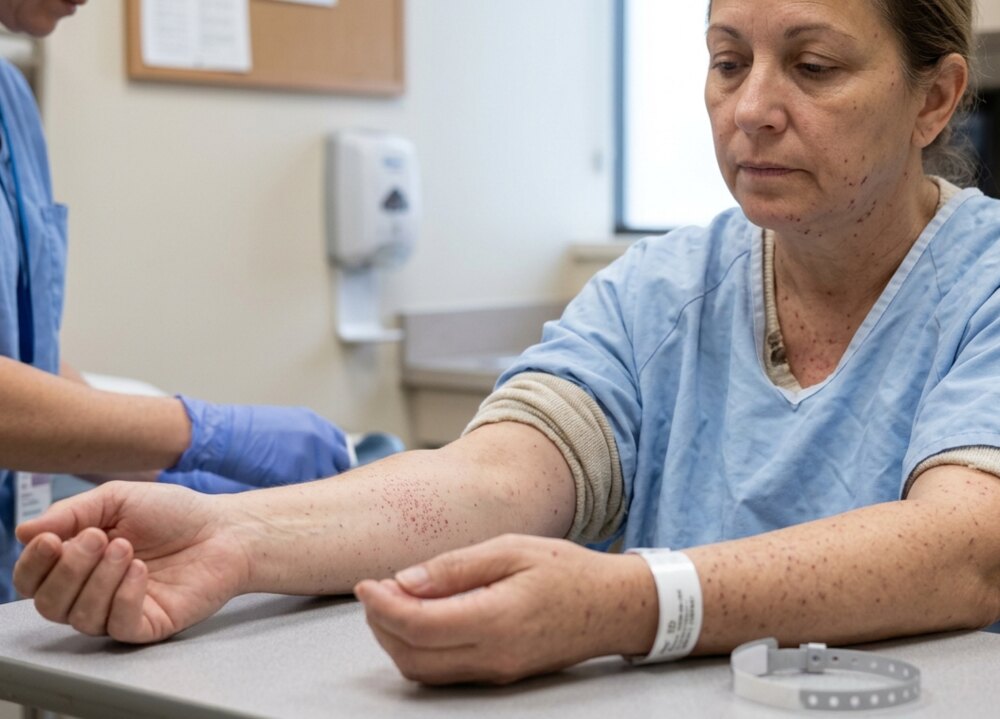
- Itching at bite sites
- Bites arranged in lines or clusters
- Commonly appear on the face, neck, arms, and hands
- Severe reactions may include hives, blisters, or intense itching
How do Bedbugs spread?
Bedbug infestations occur due to:
- Frequent travel
- Changes in pest control practices
- Resistance to insecticides
- They spread easily via clothing, luggage, bedding, and furniture.
Who Is at Risk of Bedbugs?
- People are at risk in places with frequent movement of individuals. They include:
- Hotels, hostels, and dormitories
- Apartment buildings
- Homeless shelters
- Cruise ships, trains, and buses
- Refugee camps
What Are the Possible Complications?
- Sleep disturbances and stress
- Severe allergic reactions
- Secondary skin infections from scratching
When Should You See a Doctor?
Seek medical care if:
- You experience severe allergic reactions
- Blisters or hives appear
- Bites cause persistent discomfort or infection
How are they observed?
Diagnosis is based on:
- Visual inspection of bites
- Checking mattresses, furniture, and crevices at night
- Identifying signs like dark fecal spots, shed skins, or blood stains
What Are the Treatment Options?
- Most bites heal naturally within 1–2 weeks
- Hydrocortisone cream or oral antihistamines for symptom’s relief
- Professional extermination to eliminate infestations
How Can You Get rid of them?
- Vacuum cracks, crevices, and furniture thoroughly
- Wash bedding and clothing in water ≥120°F (48.9°C)
- Dry on high heat for at least 20 minutes
- Use heat treatment: bag items and leave in a sun-heated vehicle ≥120°F (48.9°C)
- Discard heavily infested items like mattresses or couches
How Can They Be Prevented?
- Wear clothing or pajamas that cover most skin
- Inspect secondhand furniture, bedding, and mattresses
- Check mattress seams in hotels and keep luggage off the floor
- Maintain awareness when traveling or staying in shared accommodations
Frequently Asked Questions (FAQs)
Q1. Can bedbugs spread diseases?
No, bedbugs do not transmit infectious diseases, but bites can trigger allergic reactions or skin irritation.
Q2. How long can bedbugs survive without feeding?
Bedbugs can survive for several months without a blood meal, making infestations persistent.
Important Note: This information is for awareness purposes only. Please consult a healthcare professional for medical advice, diagnosis, or treatment.