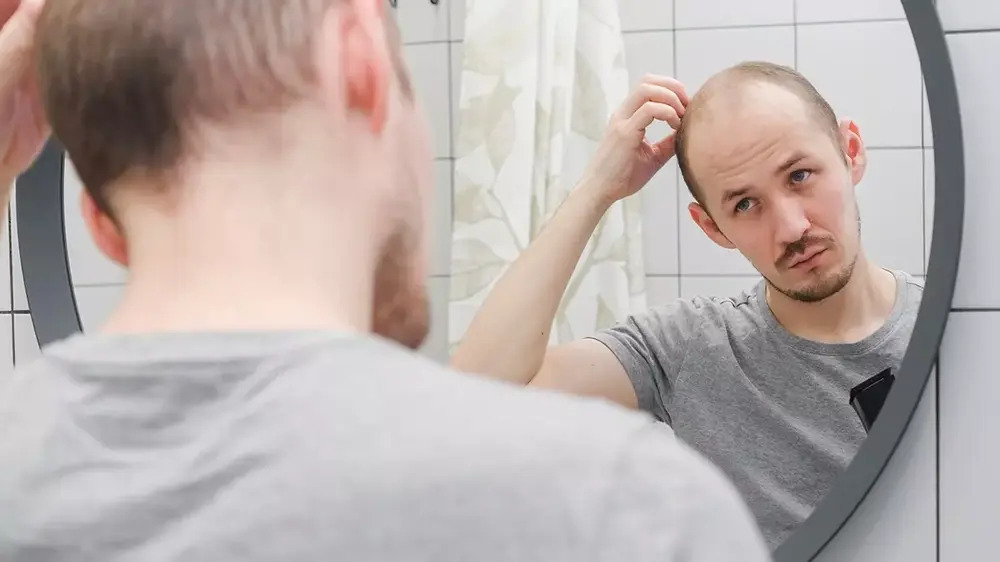
Hair loss, also known as alopecia, is a common condition that affects millions worldwide. It can impact just the scalp or the entire body and may be temporary or permanent. The main causes include genetics, hormones, medical conditions, stress, and aging. While anyone can experience hair loss, men are more often affected than women.
What are the symptoms?
- Hair loss can show up in different ways depending on the cause
- Gradual thinning on the top of the head is the most common type
- Men often notice a receding hairline, while women may see a wider hair part
- Some develop round or patchy bald spots on the scalp, beard, or eyebrows
- Sudden and heavy shedding can occur after physical or emotional stress
- In certain conditions, hair may fall out from the entire body
- Scaly, red, or swollen patches on the scalp can signal an infection such as ringworm
- Hair loss may be temporary or permanent, depending on the underlying cause
Why does this disease occur?
- Hair loss happens when new hair does not replace hair that has fallen out
- The most common cause is genetic or inherited baldness
- Hormonal changes can trigger hair loss, including pregnancy, menopause, or thyroid problems.
- Immune system disorders, such as alopecia areata, may cause patchy hair loss
- Scalp infections, like ringworm, can lead to hair loss
- Hair-pulling disorders (trichotillomania) may contribute to hair loss
- Certain medications, including those for cancer, arthritis, depression, heart disease, gout, and high blood pressure, can cause hair shedding
- Radiation therapy to the head may result in hair loss, sometimes permanently
- Severe physical or emotional stress can trigger temporary hair thinning
- Damaging hair treatments and tight hairstyles can cause traction alopecia; scarring may lead to permanent loss
Who is at risk of this disease?
- A family history of baldness increases the risk of hair loss
- The risk rises with age
- Rapid or significant weight loss can contribute to hair loss
- People with certain medical conditions, such as diabetes or lupus, are more prone to hair loss
- Chronic stress can increase the likelihood of hair thinning
- Poor or unbalanced nutrition may worsen hair loss
What are the possible complications?
- Hair loss primarily affects appearance and self-confidence
- It can lead to emotional stress, anxiety, or social discomfort
- If caused by an infection or an immune disorder, the condition may worsen without treatment
- Scarring forms of hair loss can result in permanent baldness
When should you see a doctor?
- Seek medical advice if hair loss is sudden, patchy, or rapidly increasing
- Consult a doctor if hair loss is causing emotional distress or affecting self-confidence
- Women with a receding hairline should seek early treatment to prevent permanent baldness
- A healthcare professional should always evaluate children showing unusual hair loss
How is this disease diagnosed?
- Doctors start with a physical examination and questions about medical history and hair care habits
- Blood tests may be performed to detect underlying medical conditions
- A pull test assesses how easily hair comes out, helping determine the stage of shedding
- A scalp biopsy may be done to check for infections or skin disorders
- Microscopic examination of hair can identify structural problems in the hair shaft
What are the treatment options?
- Treatment depends on the underlying cause of hair loss
- If a medical condition or medication is responsible, it must be addressed first
- Minoxidil is commonly used to slow hair loss and promote regrowth
- Finasteride is another option, mainly prescribed for men
- Other medications include spironolactone and dutasteride
- Hair transplant surgery is used in cases of permanent baldness
- Low-level laser therapy may help improve hair density in some individuals
How can you take care of yourself at home?
- Use hairstyles, volumizing products, or hair coloring to improve appearance
- Wigs, hair extensions, or shaving the head are also effective options
- Handle hair gently, especially when wet
- Use a wide-toothed comb to reduce breakage
- Avoid excessive heat styling and harsh chemical treatments
- Consult a professional hair stylist for personalized advice
How can this disease be prevented?
- Genetic baldness (male-pattern or female-pattern) cannot be prevented
- Other types of hair loss can be reduced with proper care
- Avoid tight hairstyles and harsh chemical or heat treatments
- Protect hair from strong sunlight and UV exposure
- Stop smoking to reduce risk of hair loss
- Maintain a balanced diet to support healthy hair growth
- Consult your doctor about medications that may contribute to hair loss
- During chemotherapy, using a cooling cap may help reduce hair shedding
Frequently Asked Questions (FAQs)
Q1. Can hair loss grow back on its own?
Yes. In some conditions, such as alopecia areata or stress-related hair loss, hair may grow back within months or a year.
Q2. Do hair loss medicines work for everyone?
No. Results vary from person to person. Some people see good improvement, while others get limited benefit.
Important Note: This information is for awareness purposes only. Please consult a healthcare professional for medical advice, diagnosis, or treatment.